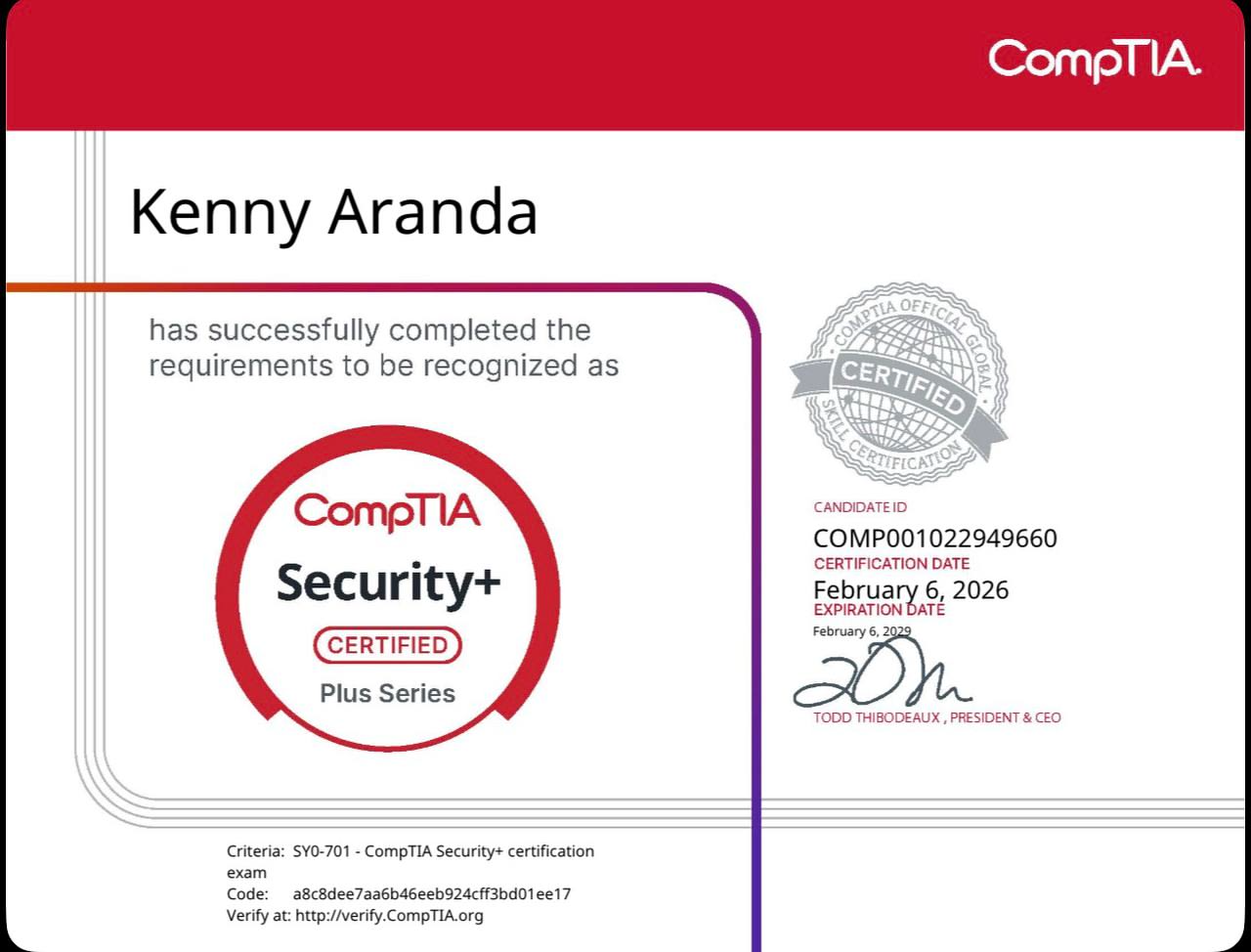
CompTIA Security+ Certification: My Journey and Study Strategy
Introduction
After working in cybersecurity for about 1.5 years, I decided it was time to formalize my knowledge with the CompTIA Security+ certification. This foundational credential validates core security concepts and is recognized globally as an entry point for security professionals. Here’s how I approached the exam and successfully earned the certification.
Why Security+ Matters
- Industry Recognition: CompTIA Security+ is required by many government and DoD positions (DoD 8570 compliance) and widely respected in the private sector.
- Knowledge Foundation: It covers essential concepts like cryptography, network security, risk management, and incident response—topics that underpin all security work.
- Career Advancement: Having this certification opens doors to security analyst, SOC analyst, and penetration testing roles across the United States.
My Preparation Strategy
With a demanding schedule and hands-on security work, I needed an efficient study plan that leveraged my existing experience:
- Udemy Practice Exams: I purchased multiple practice exam sets on Udemy and treated them as my primary study tool. These simulations exposed me to the exam format and question styles.
- Noun Annotation Method: As I worked through practice exams, I created a Google Sheet where I annotated every important noun—security protocols, attack types, acronyms, tools, and concepts. This turned scattered knowledge into a structured reference guide.
- Three-Week Timeline: I dedicated three weeks to focused preparation, balancing practice exams with reviewing my annotated notes daily.
- Hands-On Experience: My 1.5 years in cybersecurity gave me practical context for theoretical concepts, making retention significantly easier.
Exam Day Experience
The Security+ exam tests both theoretical knowledge and practical application across multiple domains:
- Performance-Based Questions: These simulations require you to configure firewalls, analyze logs, or identify security controls. My real-world experience was invaluable here.
- Acronym Overload: CompTIA loves acronyms. My Google Sheet became essential for distinguishing between TACACS+, RADIUS, SAML, and dozens of other abbreviations.
- Scenario-Based Thinking: Many questions present business scenarios requiring you to choose the best security solution. Understanding risk management frameworks helped immensely.
- Time Management: With 90 questions and 90 minutes, pacing is critical. I flagged difficult questions and returned to them after completing easier ones.
Key Takeaways
- Practice exams are gold: They not only test your knowledge but also train you to think like the exam writers. I retook each practice test until I consistently scored above 85%.
- Create your own study guide: The noun annotation method forced active learning. Writing down concepts in my own words cemented them in memory.
- Leverage your experience: My penetration testing background made topics like vulnerability scanning and exploitation obvious, letting me focus on weaker areas like compliance frameworks.
- Don’t underestimate acronyms: Knowing what LDAP, CHAP, or TPM stands for isn’t enough—you need to understand when and why each technology is used.
Recommendations for Future Candidates
- Invest in Quality Practice Exams: Udemy offers affordable exam bundles from reputable instructors. Look for ones with detailed explanations for each answer.
- Build a Reference Document: Whether it’s a spreadsheet, flashcards, or a mind map, create something you can review repeatedly in the final days before the exam.
- Focus on Weak Domains: Use practice exam results to identify your weakest areas (e.g., cryptography, risk management) and dedicate extra time there.
- Schedule Strategically: Give yourself enough time to study but not so much that you lose momentum. Three weeks of focused effort worked perfectly for my schedule.
Earning the CompTIA Security+ certification was an important milestone in my cybersecurity career. It validated my hands-on experience with structured knowledge and positioned me for the next phase of my professional journey.
If you’re preparing for Security+ or want to discuss effective study strategies, feel free to reach out!
⭐️ Building a secure future, one certification at a time.